Paris Proposal Permit Requirements Explained
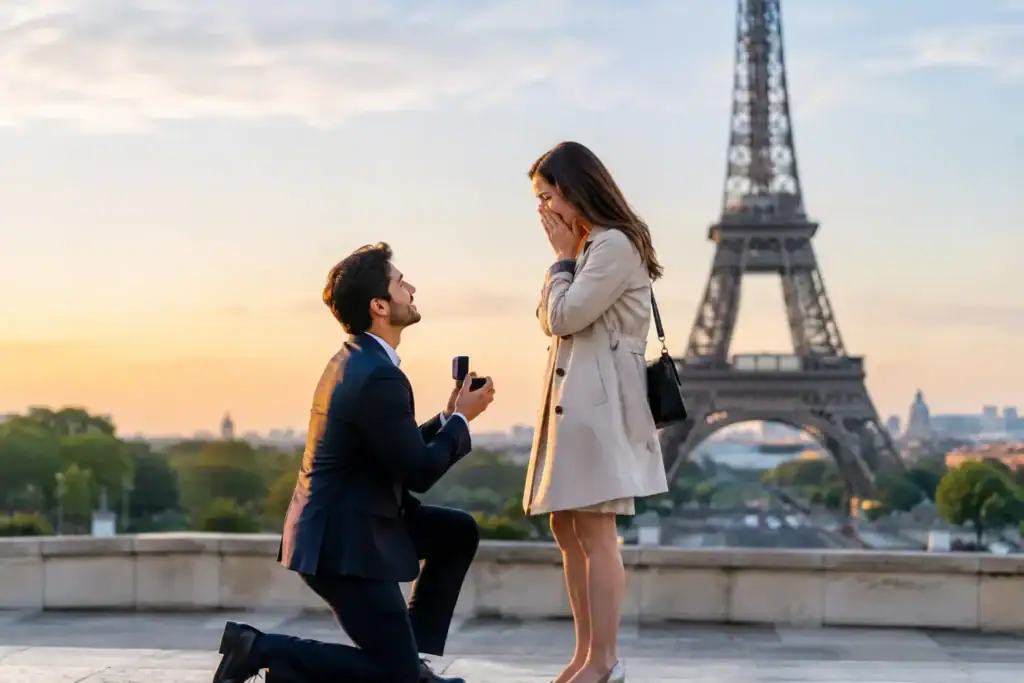
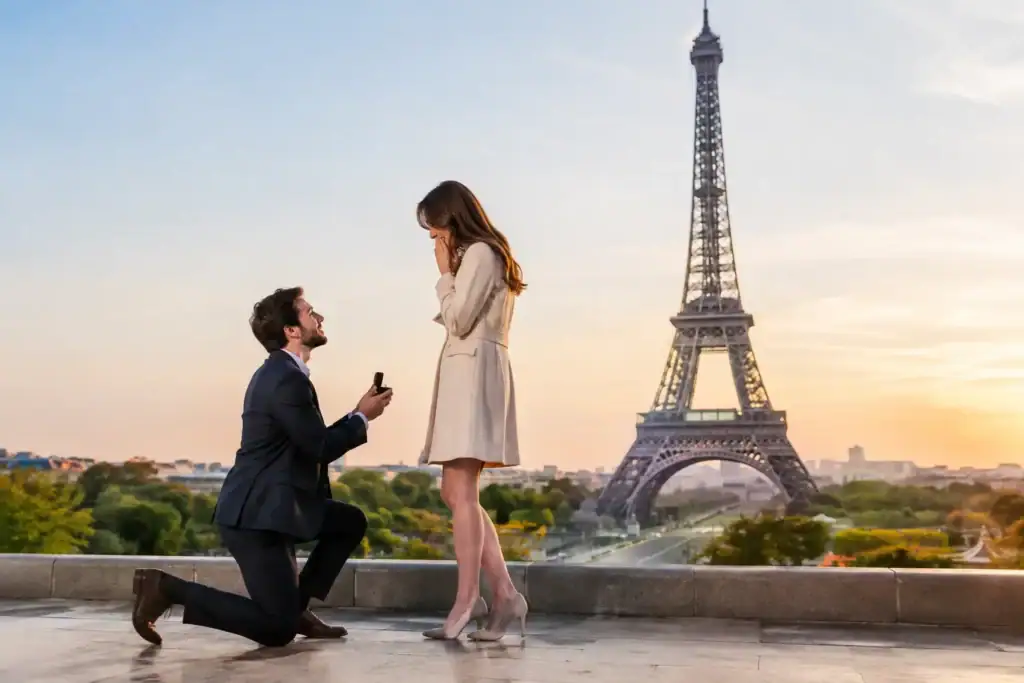
A Paris proposal should begin with the look on her face, not a difficult conversation with security or an unexpected request to remove your candles. Paris proposal permit requirements can be surprisingly specific, especially when your vision includes an Eiffel Tower backdrop, a professional photographer, flowers, music, or a styled surprise in a public place.
The good news is that a cinematic proposal is absolutely possible. The key is choosing a setting and production level that match the rules. A simple walk-and-propose moment has very different requirements from a private terrace filled with roses, illuminated letters, champagne, and a photographer ready to capture every second.
Paris Proposal Permit Requirements Depend on the Setting
There is no single “proposal permit” for Paris. What you need depends on where the proposal happens, how much space you use, how long the setup remains in place, and whether the moment involves commercial activity or event equipment.
A public square, park, bridge, riverside walkway, or Eiffel Tower viewing area is managed differently from a hotel suite, private rooftop, restaurant terrace, or privately chartered boat. That distinction matters before you order a floral installation or tell your musician where to stand.
For an intimate proposal with no installation – perhaps you kneel during a quiet sunrise stroll with only your partner and a discreet photographer – formal authorization may not always be required. But once you introduce a structured setup, furniture, a red carpet, large decor, amplified sound, a crew, or a prolonged shoot, the situation changes. Public spaces are shared spaces, and local authorities may require permission for occupation, filming, photography, or organized events.
Public parks, bridges, and Paris streets
Paris is beautiful precisely because its most romantic scenes are often outdoors. A proposal beneath autumn trees, along the Seine, or facing the sparkling Eiffel Tower can feel spontaneous. Yet public does not mean available for any kind of production.
Authorities and site managers can restrict commercial photography, tripods, large props, floral arches, candles, portable lighting, crowd-building activity, and anything that obstructs pedestrians. Certain gardens and landmark areas also have their own conditions, opening hours, protected surfaces, and rules about where guests, vendors, and equipment may be placed.
A small bouquet and a private question are one thing. A heart-shaped rose installation, giant “Marry Me” letters, dozens of candles, and a videography team are another. Do not assume that because you saw a beautiful proposal on social media, the same setup is permitted at the same location today. Rules, security measures, weather restrictions, and access conditions can change.
Why Private Venues Make Planning Easier
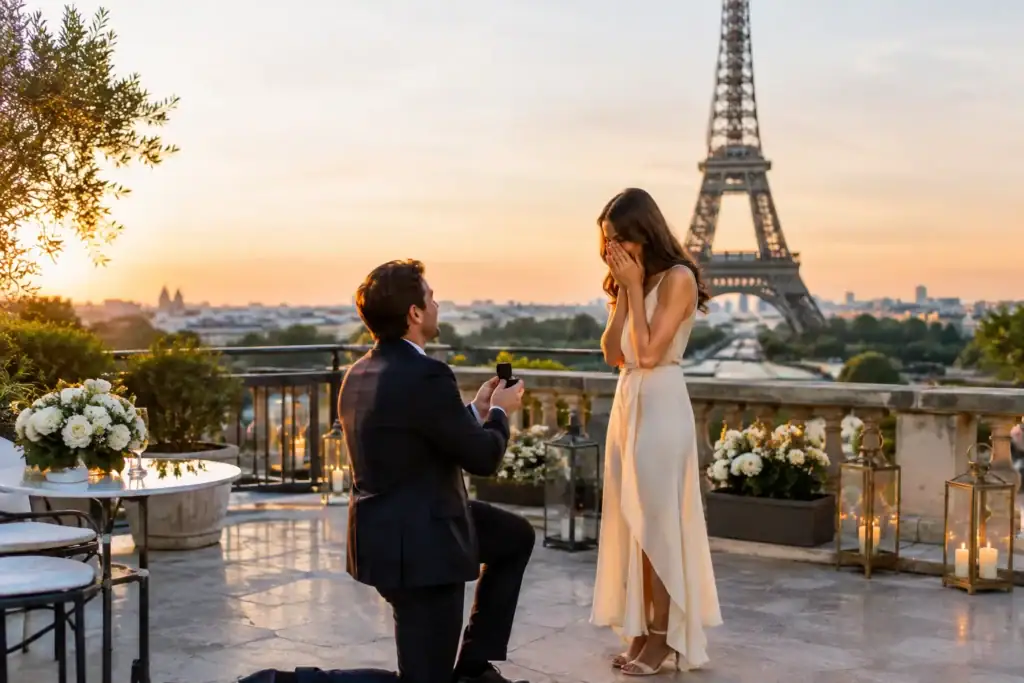
For couples who want a high-impact reveal without uncertainty, private venues are often the most reliable answer. A private Eiffel Tower-view terrace, luxury hotel room, apartment, restaurant space, or boat can provide the privacy and control that public locations cannot.
The venue’s approval is still essential. A private property may allow a proposal but restrict open flames, confetti, large floral deliveries, outside musicians, or use of its common areas. Hotels may also require advance coordination for elevator access, room transformations, vendor arrival times, and discretion at check-in. The right planner confirms these details before the day, rather than asking staff to make exceptions while your partner is nearby.
Private spaces are especially valuable when the surprise includes production. You can create the full experience: a path of candles, roses across the floor, champagne waiting on ice, a violinist playing her song, and the skyline glowing beyond the terrace. Instead of worrying about passersby or a security officer ending the moment, you can focus on getting down on one knee while she is completely speechless.
A Seine boat proposal works similarly. The operator’s authorization and onboard rules govern the experience. Some boats are ideal for a quiet champagne proposal, while others can accommodate decor, a photographer, musicians, or a more elaborate reveal. Capacity, navigation timing, weather, docking, and the route all affect what is realistic.
Candles, sparklers, and large decorations
These details create magic in photographs, but they are never automatic. Real candles and sparklers can be prohibited in public areas, on terraces, in parks, aboard boats, and inside hotels due to fire safety rules. Wind is another practical issue. Even where a venue permits candles, flameless candles may be the more elegant and dependable choice.
Large letters, backdrops, arches, furniture, and red carpets need room, safe installation, delivery access, and a clear removal plan. They should not block entrances, pedestrian routes, emergency access, or views in protected public areas. An experienced team plans the visual impact around the site rather than forcing a design into a place where it does not belong.
Music also deserves advance thought. A violinist playing softly on a private terrace may be welcome. Amplified music in a public garden or near residences may trigger noise concerns or be refused entirely. The most romantic choice is not always the loudest one. Sometimes a single live instrument and the city lights are more than enough.
Eiffel Tower Night Photography Has a Special Consideration
The Eiffel Tower after dark is one of the most unforgettable proposal backdrops in the world. Its sparkling lights can turn the moment she says yes into a scene that feels straight from a film. But professional night photography at the landmark is not something to leave to chance.
The Eiffel Tower’s illuminated display is subject to separate rights and permissions for commercial use. If your proposal includes professional nighttime photography or videography intended for commercial use, promotion, or organized production, proper authorization matters. This is one reason a casual phone photo and a professionally produced proposal are not treated the same way.
My Proposal in Paris holds an official Eiffel Tower license for night photography, allowing couples to receive professionally captured images of their once-in-a-lifetime moment through an authorized provider. It is an important distinction when the sparkle is central to your dream proposal. You should always ask who is responsible for permissions, what the photographer is authorized to do, and whether the planned use of the images has been considered.
Daytime photography has different practical considerations, but it still requires respect for site rules, security instructions, crowds, and any restricted areas. A trusted local team will recommend a viewpoint and timing that protect both the surprise and the final images.
The Questions to Settle Before You Book
Before committing to a Paris proposal concept, get clear answers in writing. You need to know whether the location is public or private, whether your setup is allowed, whether professional photography is approved, and whether candles, music, flowers, furniture, or signage have restrictions.
Also ask about timing. Paris locations can be affected by private events, demonstrations, sporting events, seasonal closures, construction, security zones, and sudden weather changes. A terrace proposal may need a rain plan. A riverside proposal may need a backup for high water or wind. The best proposal plans are romantic because they are prepared, not because they gamble on perfect conditions.
For a simple public proposal, less can be more. Keep the footprint small, remain respectful of the surroundings, and let Paris do much of the visual work. For a luxury production, select a venue designed to host it and work with professionals who coordinate every moving piece discreetly.
Do not confuse permission with access
Even if a public area is open, security staff can direct people away from specific zones or prohibit equipment that creates congestion. Even if a hotel allows proposals, it may not allow installations in every room category. Even if your photographer can shoot nearby, that does not mean a full crew, lighting setup, and decor can occupy the same space.
That is why a site visit, venue relationship, or detailed local knowledge can protect the experience. Your partner should see the flowers, hear the music, and feel the surprise unfolding exactly as you imagined – not see you negotiating logistics at the last minute.
Paris rewards thoughtful romance. Choose a setting that supports your vision, confirm the permissions behind the scenes, and leave room for the beautiful part: taking her hand, asking the question, and watching the city of love become part of your story forever.
You May Also Like

Paris Proposal Agency Reviews: What to Check
Paris proposal agency reviews reveal service, style, and trust. Know what to check before planning a private, polished Paris engagement…Licensed Eiffel Tower Photography for Proposals
Licensed Eiffel Tower photography makes your Paris proposal shine with authorized nighttime images and complete confidence from the first flash,…Proposal Venues in Paris That Feel Truly Private
Choose proposal venues in Paris with privacy, Eiffel Tower views, beautiful lighting, and expert coordination for a breathtaking yes and…